Utica University nationally recognized for commitment to career development
Utica University has received national recognition as one of the renowned Colleges of Distinction for its commitment to career development....

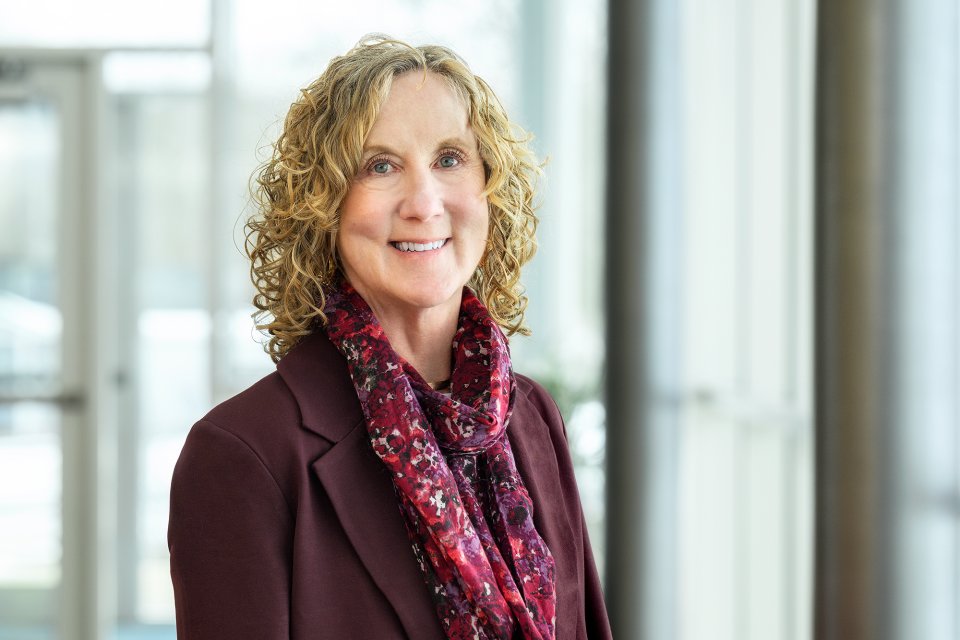
"The Provost is a trustworthy ally of the President who works in tandem with the University President, supporting the President’s vision and working to operationalize and implement that vision."
As President Stephanie Nesbitt takes the helm of Utica University this year, the Office of Academic Affairs also welcomes Dr. Ann Damiano in her new role as Provost and Senior Vice President of Academic Affairs.
Utica Magazine spoke with Dr. Damiano about her career in higher education, the challenges the industry faces at a national level, and what we may expect from her tenure as Utica’s newest Provost.
UTICA MAGAZINE: How did you see your career path when you first started out, and did you ever think it would lead to academic leadership?
ANN DAMIANO: My career in higher education started in the early 1980s at Buffalo State College. I coordinated tutorial services for the SEEK/EOP Program. I also developed curriculum and taught writing in the inaugural summer institute.
In 1983, I went to Mount Saint Mary College in Newburgh, New York, where I initially directed the institution’s tutoring program and support services for under-prepared students. I also administered placement testing and taught English courses. In the mid-90s, when the Middle States Commission on Higher Education began to require institutions to assess learning outcomes, I was assigned the responsibility of directing the College’s “outcomes assessment” efforts.
Mount Saint Mary College was a young college when I started there, and I was a young professional. I grew with the College. Over the course of my 30-year career at ‘the Mount,’ I progressed in leadership roles—and I had many leadership responsibilities, from chairing developmental course offerings to serving on two self-study steering committees to coordinating new student orientation programs and chairing the College’s commencement committee. I was fortunate to have excellent female role models and mentors in my early and mid-career, and I owe them a debt of gratitude.
In 2010, I left my friends, colleagues, and beloved students at Mount Saint Mary College and went to Lebanon Valley College in Central Pennsylvania where I served as the Senior Associate Dean for Academic Affairs for seven years.
I came to Utica University (then college) in 2017 as the Dean of Assessment.
This position offered me a new challenge and an ability to advance the work I was doing in the scholarship of teaching and learning. Also, while I loved the innovative and dynamic faculty at Lebanon Valley and the warmer climate of Central Pennsylvania, I am a native daughter of New York state, and I was glad for the opportunity to return “home,” particularly since my older daughter had just given birth to my first grandchild.
UM: There is the textbook definition of a provost, but how do you see the role and the way it serves the university community?
AD: The Provost is the chief academic officer of an institution with responsibility for and oversight of all academic and academic-related matters, including faculty affairs, academic programs and opportunities, research and scholarship, and accreditation. The Provost steers the academic direction of the University and is the person most responsible for advancing its educational mission. This involves making sure that faculty have what they need to fulfill the mission and advance teaching and learning. It means working with Advancement to cultivate donor support for student opportunities. It means ensuring that the institution’s educational offerings are distinct, attractive to students, and aligned with work force needs. The Provost is a trustworthy ally of the President who works in tandem with the University President, supporting the President’s vision and working to operationalize and implement that vision.
UM: How would you describe your working relationship with President Nesbitt?
AD: I have enjoyed a collaborative, cooperative working relationship with President Nesbitt ever since I arrived at Utica University when she was the Director of the MBA Program. In my eight years at Utica, Stephanie and I have served together on the academic leadership team, the President’s Cabinet, the Institutional Effectiveness Committee, the Deans’ Council, and the Strategic Planning Committees (2019 and 2026). She is someone I have regularly relied upon and trusted, and I have frequently sought her counsel.
For me, working with President Nesbitt has been a very positive experience. She’s smart. She’s decisive. She’s fair. She’s thoughtful. Just as important as any of these attributes, she has an excellent sense of humor. What I especially value about her is that she is student-centered and often thinks about how a decision or action will impact the student experience.
UM: How have your previous roles here at the institution helped prepare you for this one?
AD: It’s hard to pinpoint precisely how my previous roles at the institution (Dean of Assessment, VP of Institutional Effectiveness, Senior Associate Provost for Academic Affairs) prepared me for the Provost position. I know the institution and its faculty and staff. I have a clear commitment to Utica’s mission. I have a generally good understanding of the students we serve. I won’t experience the learning curve one faces in a new position at an unfamiliar institution. That said, I believe that each one of my experiences over my very long career in higher education and the fabulous colleagues I’ve had and leaders I have known are what will assist me most in this new role.
UM: What would you say is one of the toughest challenges facing Utica University and higher ed overall, and what is the path forward amid such challenges?
AD: We all know the toughest challenge facing higher education in 2026 is a decline in student enrollment in private colleges and universities. Those institutions without big endowments have suffered the most from the demographic shifts in the last 20 years. Responding to emerging technologies, particularly AI, is yet another challenge facing colleges and universities, most especially its faculty. Many federal policies have also created challenges or the possibility of challenges for higher education and its people. These policies threaten the democratization of American higher education.
For me, personally, another challenge has been witnessing declining student interest in the liberal arts, a decline that started decades ago. As an academic leader, I must accept that this change is happened—has happened!—and refrain from judgment. But that doesn’t stop me from feeling wistful and sad to see the end of an era.
There is no one path forward amid such challenge, but I do think that institutions would benefit from anticipating the future more than they do and preparing for it better than they have. I mean this about higher education, in general, not Utica University specifically. I also believe institutions need to be nimbler and more adroit when it comes to change.
UM: What are you looking forward to the most in this new role?
AD: I am most looking forward to the opportunity to create more high-impact experiential learning opportunities for our students.
For a general list of frequently used logins, you can also visit our logins page.